
Apicoectomy
 A tooth’s root system is complex, with many small canals and branches. Sometimes, pain and swelling in a tooth can return months or even years after root canal treatment. This occurs due to bacteria hiding in these areas, and it’s especially common near the root tip, called the apex.
This situation doesn’t always mean the tooth needs to be removed. We may be able to save it with a procedure called an apicoectomy.
What Is an Apicoectomy?
An apicoectomy is a minor surgical procedure meant to save a tooth by removing the root tip. It is also called root-end surgery or root resection.
Our endodontists typically recommend an apicoectomy when a tooth has already had root canal treatment, and the source of infection cannot be predictably addressed from inside the tooth. In some cases, retreatment may not be effective or feasible due to the complexity of the root structure or prior restorations.
In these situations, a surgical approach allows us to directly access and treat the area at the tip of the root while preserving the natural tooth.
What to Expect with Apicoectomy
We begin by evaluating the tooth using advanced imaging technology that provides a detailed view of the root and surrounding bone. We’ll then explain what we find and what we recommend.
Next, we numb the area so you won’t feel any pain during the procedure. We also offer nitrous oxide and oral sedation if you prefer a more relaxing experience. You’ll also appreciate our added comfort measures, such as noise-canceling headphones and a weighted blanket, to help you relax.
During the procedure, you can expect the following steps:
- Accessing the root tip — We make a small opening in the gum tissue to access the root tip.
- Removing the root tip — Next, we remove a small portion of the root tip and any infected tissue around it.
- Sealing the root — Then we place a small filling to seal the root tip.
- Graft the area — In some cases, regenerative materials such as a bone graft or guided tissue regeneration may be used to support healing and help restore the surrounding bone.
- Closing the area — Finally, the gum tissue is closed with small sutures.
We use a surgical microscope throughout the procedure, giving our specialists a precise, detailed view not possible with the naked eye.
Apicoectomy Recovery
Before you leave our office, we will give you clear post-procedure instructions. Some mild swelling and discomfort for a few days after is typical, but many patients return to their usual activities the next day. Taking an over-the-counter pain medication is typically all that’s needed for relief.
Call Our Specialists for Skilled Care
If you have pain or swelling in a tooth that already had a root canal, don’t wait to reach out. Advanced Root Canal Specialists in Columbia, MD, at (410) 772-9600. We offer early morning and evening hours Monday through Friday and keep same-day appointments available for dental emergencies.
We welcome patients from all over Maryland, including Columbia, Baltimore, Rockville, Laurel, and beyond.
Benefits of Apicoectomy Treatment at ARCS
Advanced Skill and Microsurgery Precision
A Second Chance for Your Tooth
Comfort Throughout the Process
Frequently Asked Questions
An apicoectomy may be recommended when a tooth continues to show signs of infection or inflammation after root canal treatment, and retreatment is not the best option.
Reasons may include:
- Persistent infection near the root tip
- Complex root anatomy
- Previous restorations that make retreatment difficult
- Areas of infection that cannot be predictably reached from inside the tooth
Before recommending surgery, we carefully evaluate the tooth and discuss all available options.
An apicoectomy is performed using local anesthesia to ensure you are comfortable during the procedure. Many patients are surprised by how manageable the procedure is.
Some soreness, swelling, or tenderness after surgery is normal as the tissues heal. Most discomfort can typically be managed with recommended medications and following post-operative instructions.
For patients who feel anxious, we offer nitrous oxide and oral sedation options to help create a more comfortable experience.
Most patients experience mild to moderate discomfort and swelling for a few days after an apicoectomy. Swelling may be most noticeable during the first two to three days and gradually improves.
Many patients return to normal activities quickly, although the bone around the treated root continues healing over several months.
We provide detailed post-operative instructions and follow-up care to monitor healing and ensure the tooth is progressing as expected.
Intentional replantation is a tooth-saving procedure where a tooth is carefully removed, treated outside the mouth, and then placed back into its original position.
This approach may be considered when other treatment options are limited, such as when the problem area cannot be predictably accessed through traditional retreatment or surgery.
The procedure requires careful planning and precise technique to protect the tooth and surrounding tissues. When successful, intentional replantation allows patients to keep their natural tooth rather than moving directly toward extraction.
Intentional replantation is generally considered only in carefully selected cases when other options are not predictable.
- Examples may include:
- Complex root anatomy
- Difficult-to-access areas of infection
- Situations where traditional retreatment or apicoectomy may not provide the best solution
Our doctors will carefully evaluate your tooth and discuss whether intentional replantation is appropriate based on your individual circumstances.
Our Team
-

The Team Behind Your Care
Read MoreAt Advanced Root Canal Specialists, we believe exceptional endodontic care goes beyond technical treatment. It’s about how patients feel, how clearly we communicate, and how consistently we show up for both our patients and referring doctors.
We are equally committed to fostering a positive, supportive culture within our team because we believe the best patient experiences are created by people who feel valued, aligned, and take pride in the care they provide. Our purpose, mission, and values guide every interaction and reflect our commitment to delivering care that is precise, …
Apicoectomy Technology
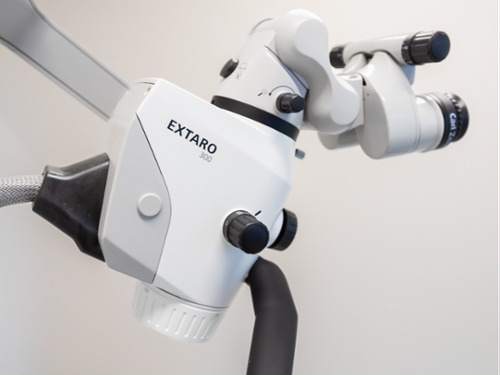
Surgical Microscopes
Surgical microscopes give our endodontists a highly magnified, brilliantly lit view of the treatment area—details that are simply not visible to the naked eye. For procedures like apicoectomy, retreatment, and crack diagnosis, this level of precision is a necessity.
Microscope-assisted treatment means more accurate diagnosis, more thorough care, and better outcomes for our patients.